Freedom Bridge Project
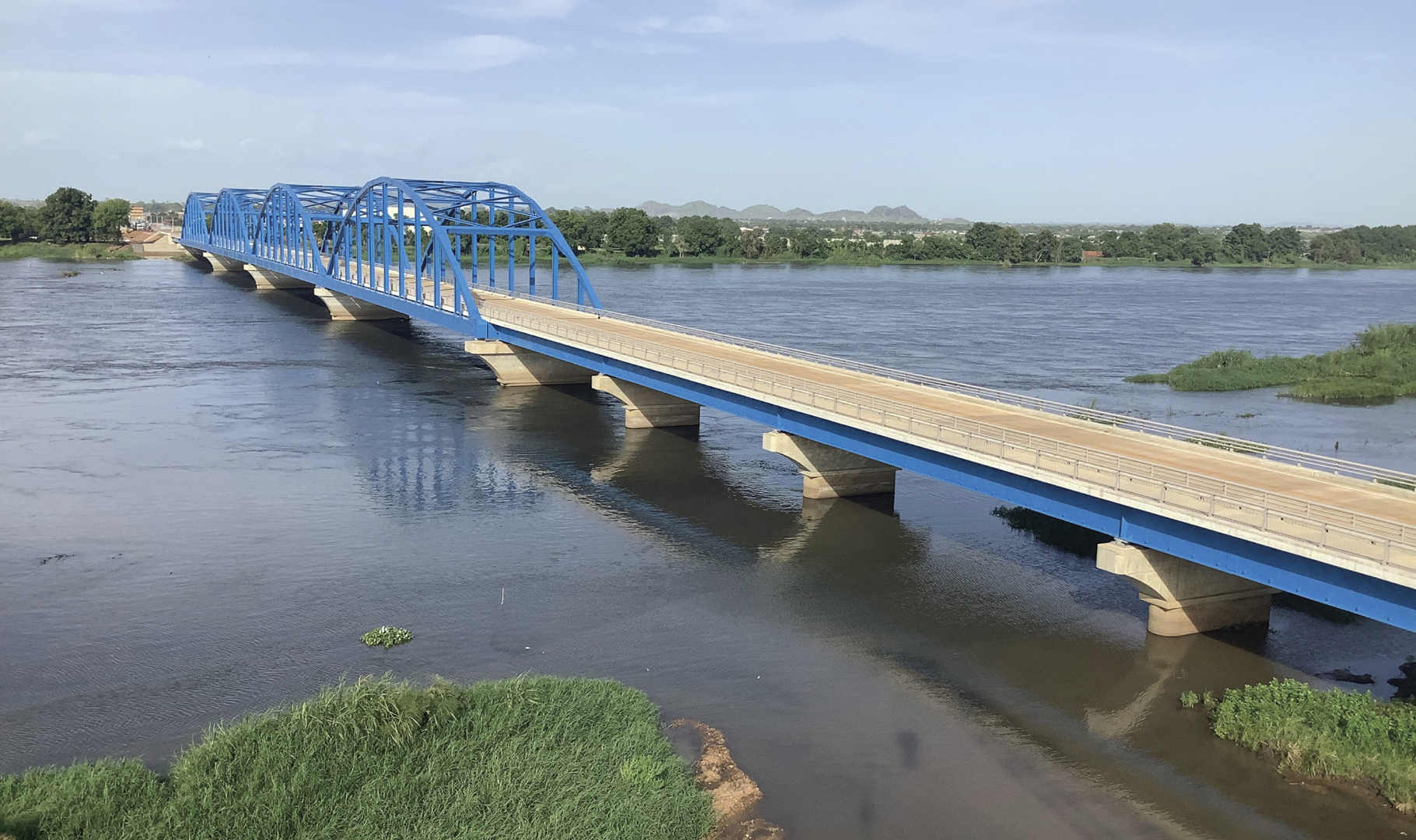
South Sudan became independent from Sudan after more than two decades of civil war. After independence, the government formulated the South Sudan Development Plan (2011–2013), which aimed to (1) rebuild infrastructure, (2) restore public safety, and (3) foster economic development and improve the quality of life for its citizens.
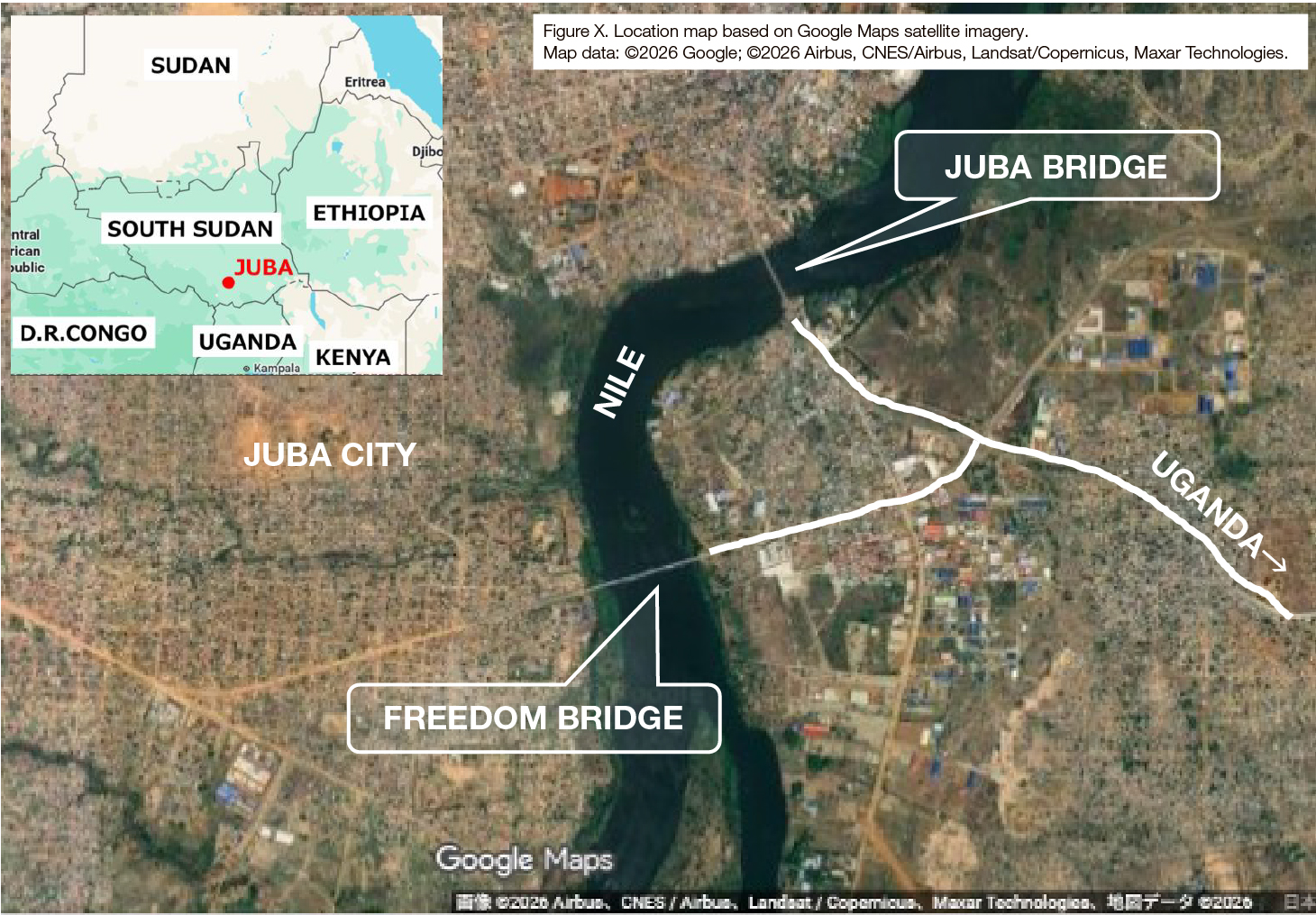
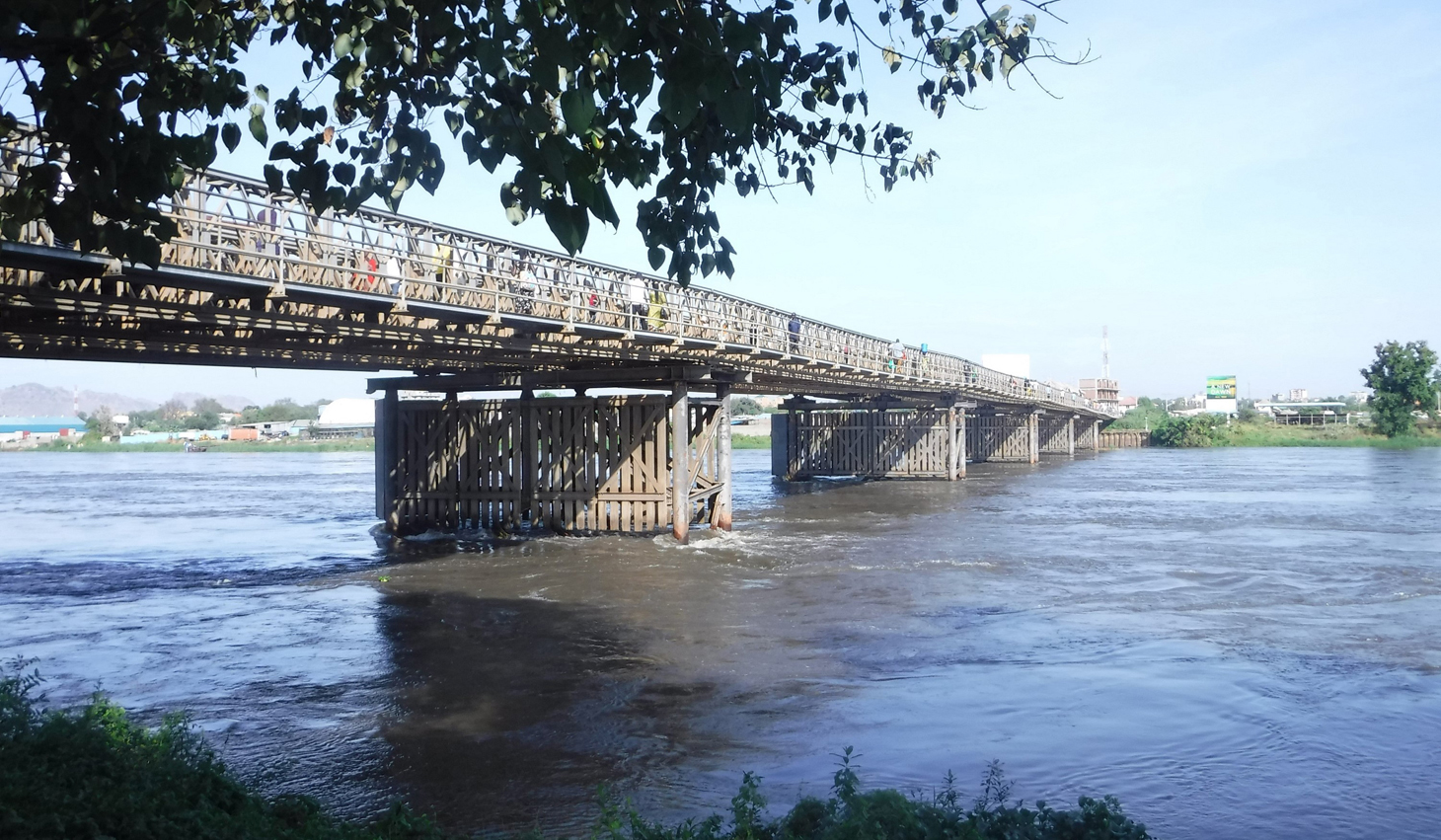
As a landlocked country, South Sudan recognized that securing international transport channels and logistics routes was essential to achieving these goals. Efficient routes to the capital, Juba — located on the Nile — include the southern corridor from Kenya’s Port of Mombasa and the northern corridor via Port Sudan. Until the opening of the Freedom Bridge in 2022, the Juba Bridge provided the only crossing into the capital.
The existing Juba Bridge, however, was inherently fragile and had structural deficiencies. Given that bridge’s narrow width and limited capacity for heavy vehicles, the government prioritized the construction of a new bridge. The construction was originally planned for approximately three and a half years (from August 2013 to December 2016). Due to two episodes of civil conflict arising from political confrontation and the COVID‑19 pandemic, the project ultimately took about nine years to complete.
Key features of the Freedom Bridge project are as follows:
- 1)Success was underpinned by Japan’s strong commitment, dedicated leadership, and sustained efforts despite repeated disruptions caused by the political confrontation and the COVID‑19 pandemic.
- 2)The project laid the foundation for building a new South Sudan and stands as a symbol of recovery, reconciliation, unity, and international cooperation after overcoming the civil conflict and the COVID‑19.
- 3)It provided a reliable and efficient logistics artery to the capital, helped restore public safety, and contributed to economic development, creating jobs for returnees, demobilized soldiers, and low‑income citizens.
- 4)It marked the first use of Japanese‑brand steel pipe sheet piles in Africa.
1Project Background
South Sudan is the world’s newest nation, having separated and become independent from Sudan in July 2011 after over 20 years of civil war. Even after its independence, the establishment of economic infrastructure has been slow to come by in South Sudan, with the capital, Juba City, facing a particularly serious lack of socioeconomic infrastructure. With the issues of providing livelihoods and settlements to returning civilians and discharged soldiers still unresolved, the socioeconomic activity of the citizens of South Sudan was significantly hampered, and there was an urgent need to restore public safety and ensure reliable logistic routes. South Sudan is a landlocked country, and as it relies on importing a large number of resources, ensuring international transport channels is a major issue in the nation’s recovery efforts. The logistics routes to Juba City are the southern route that starts from Mombasa Port in Kenya (the Juba–Nimule Road and the Juba–Yei Road) and the northern route that goes via Port Sudan. As for the Juba–Nimule Road, which is the most efficient route and in good condition, work by USAID to update the paving of the road is ongoing, with it regarded as a core route for international logistics. Access into the center of Juba City, however, requires going over Juba Bridge (a temporary Bailey bridge), which spans across the Nile River. This bridge has poor durability, and in the past has suffered structural damage. It is also narrow, meaning large vehicles struggle to get across the bridge, causing traffic jams. Because of these circumstances, the South Sudan government aimed to improve the quality of life of its citizens and reduce poverty by building infrastructure, with economic development and conflict-prevention/safety the main pillars of its South Sudan Development Plan (2011–2013). Particular examples of government policy goals include the development of a paved trunk-road network and the reduction in the risks of future crises and conflicts. To encourage development of the city and facilitate logistics, the construction of a new bridge over the Nile River was a key challenge for the South Sudan government. By constructing a new bridge a few hundred meters upstream from the existing Juba Bridge, as well as a road that connects to it, it would make it possible to disperse traffic and for road users to bypass passing traffic. It was expected that this would help promote the systematic use of urban land and prevent urban sprawl.
The construction of the bridge and road as a public works project was expected to help stabilize public safety by providing employment opportunities to returnees, demobilized soldiers, and low-income individuals. Against this backdrop, the South Sudan government submitted a request for grant aid from Japan, and an Exchange of Notes was signed in November 2009. After a preliminary survey was conducted by JICA, it was decided that a two-lane bridge about 560 meters long (with a sidewalk on one side) and 50 meters of paved approach road at each end would be built. It would be an infrastructure project that would play a key role in supporting the recovery and development of Juba City and South Sudan as a whole.
2Project Chronology
The history behind the establishment of South Sudan as a nation was as described in the previous section. At the outset of its independence, expectations were high regarding peace and its development; however, political conflict became increasingly severe during the process of nation-building. In particular, the conflict of power between the president (the Dinka group) and the vice president (the Nuer group) was a factor in fueling political instability while heightening tensions between South Sudanese nationals.
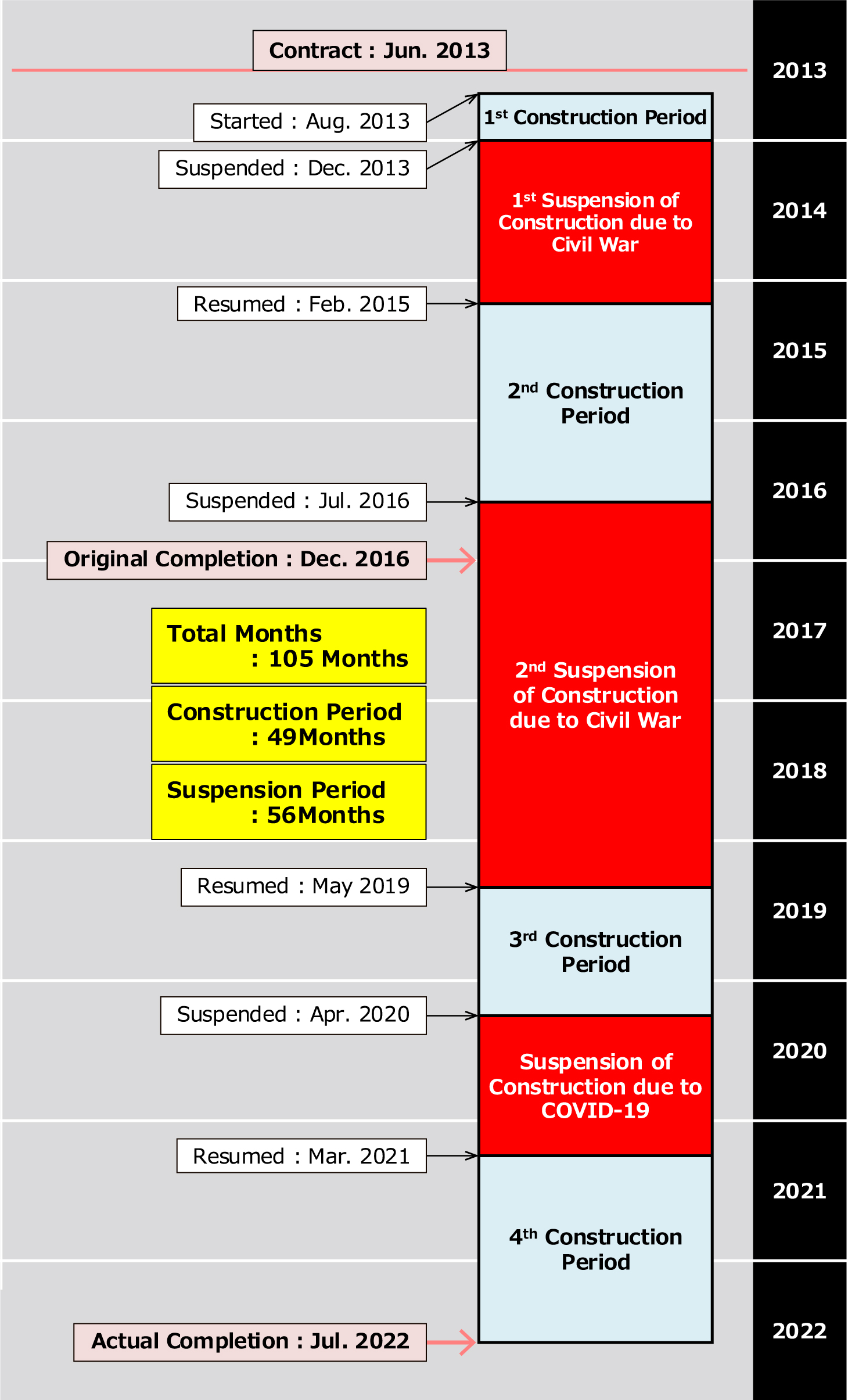
The construction work began in August 2013 and was initially scheduled to be completed in December 2016. However, as the project was greatly impacted by the situation within the country, the construction work was frequently put on hold. Consequently, the bridge was opened in May 2022, with the initial schedule of three and a half years turning out to actually be about nine years.
Figure 1 shows a timeline of the main incidents during the construction project.
2.1From June 2013 to December 2013 (from the signing of the project contract to the first evacuation abroad)
After the project contract was signed on June 15, 2013, work was progressing in Japan to draw up the construction plan and prepare to procure materials and equipment. In August 2013, the first project team arrived in South Sudan. After their arrival, they worked on setting up a system that would receive a large volume of equipment and materials transported mainly from Japan, while also undertaking tasks such as negotiating with the project client and local subcontractors, and setting up a temporary work yard. From October onward, they began to receive the equipment and materials that had arrived at the worksite.
The political situation in the country, meanwhile, showed signs of instability. In July, the president dismissed opposition ministers, including the vice president, sparking greater political tension.
Despite these circumstances, the work to receive the equipment and materials from Japan continued. However, on December 15, a clash broke out between government soldiers in Juba. The president criticized this clash as a coup d’etat by the vice president, and this conflict developed into a nationwide civil war.
On December 16, the next day, the government of South Sudan imposed a curfew. JICA instructed everyone to remain on standby at home, and the construction work was officially put on hold.
The civil war continued unabated, and on December 23, the Japanese government issued an evacuation advisory notice (Level 4).
This began the evacuation of all project-related personnel out of the country on charted aircraft operated by the UN and the United States. On December 24, everyone had been evacuated.
2.2From December 2013 to February 2015 (from the first evacuation to resuming the project)
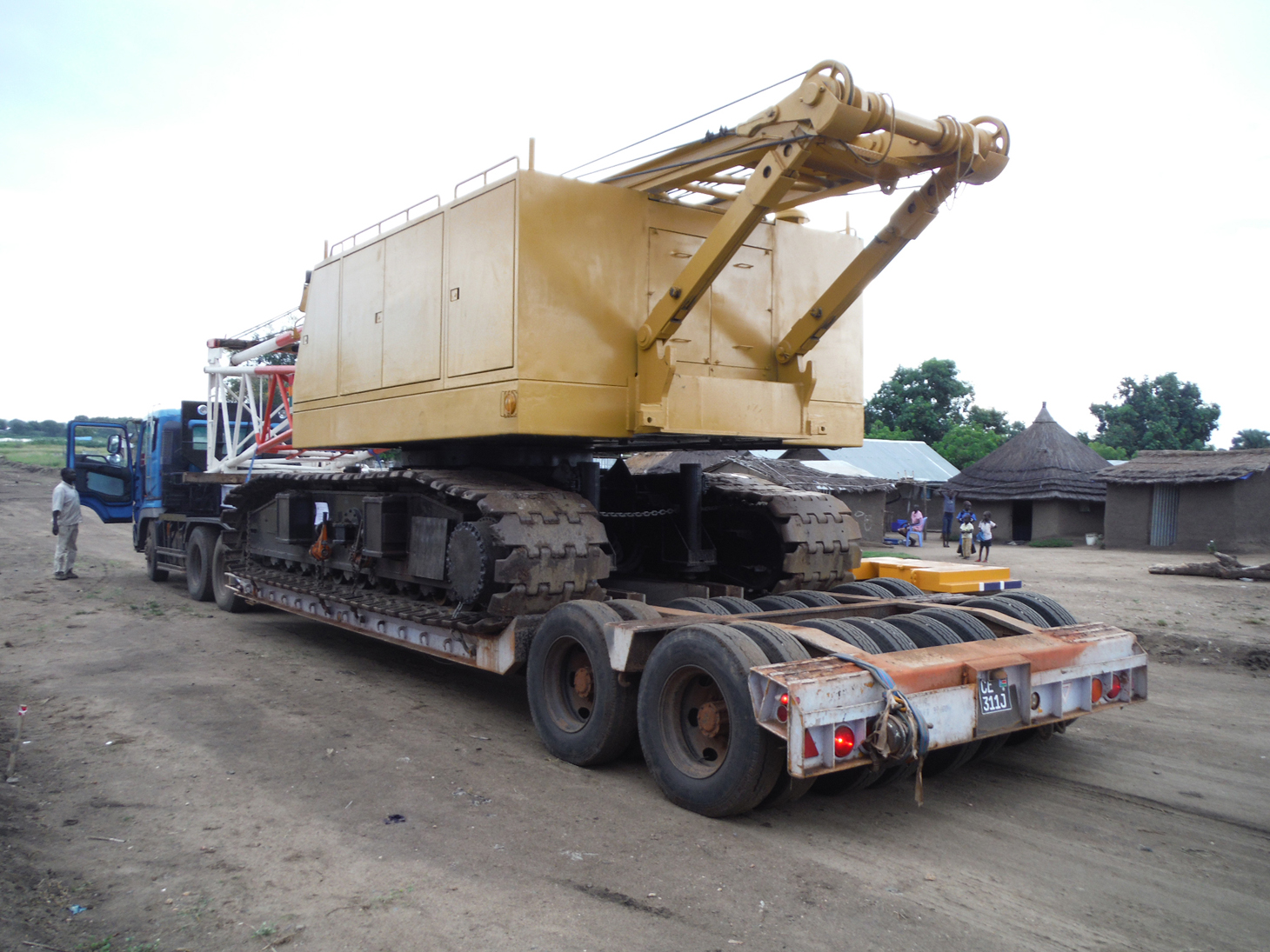
Although the evacuation of project personnel was done successfully, 109 trailers of equipment and materials imported from Japan had not been unloaded and were stuck between Mombasa and Juba, creating a major problem. To resolve this issue, a team from Egypt was dispatched to Juba in February 2014, and they undertook the work to unload this equipment and materials.
Meanwhile, on January 23, 2014, the president’s faction and vice president’s faction signed a ceasefire agreement in Addis Ababa, Ethiopia, through the mediation of East African countries.
While the fighting continued even after the ceasefire agreement, from October, the situation in some regions began to stabilize. As a result, on October 24, the Japanese government took measures to lower the travel advice level from Level Four to Level Three for only the capital Juba and its surrounding regions.
This prompted the contractor to dispatch a survey team on November 19 to check whether the local area was safe. After confirming it was not dangerous, it was decided that the construction work would be resumed. From December, staff gradually returned to Juba and began preparations to resume the project. The construction work officially resumed on February 16, 2015.
2.3From February 2015 to July 2016 (from resuming the project to the second evacuation)
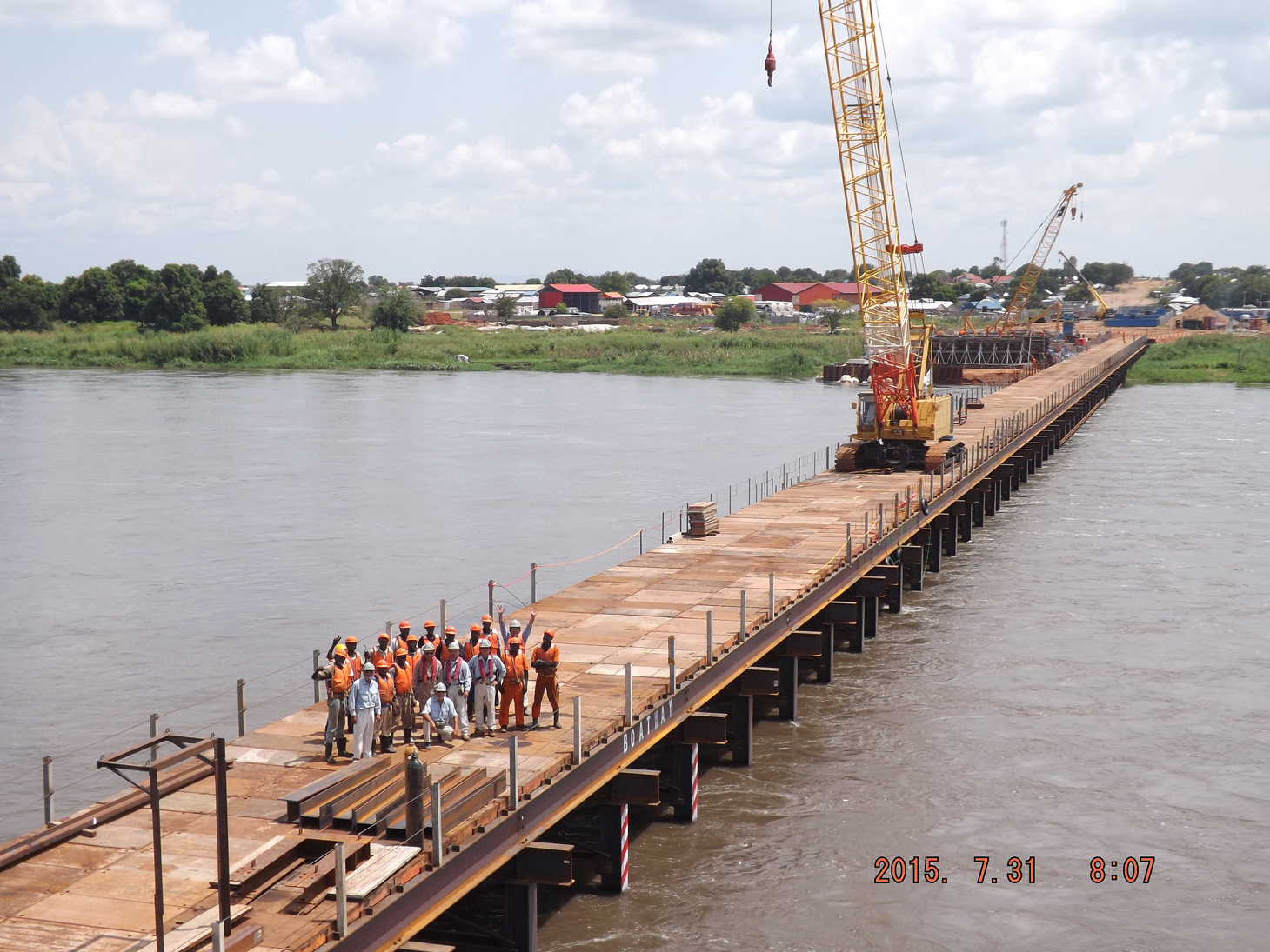
After resuming the construction work in February 2015, in the second half of February, work began on building the 450-meter temporary bridge across the Nile River and the substructure on the land side. In October, construction began on the river substructure using the temporary bridge. In April 2016, work also began on the superstructure of the land section, with 150 meters of steel girders erected by June.
Meanwhile, in South Sudan, as a result of peace talks led by the Inter-Governmental Authority on Development (IGAD), a peace agreement was reached on August 26, 2015. The former vice president then returned to Juba to be reinstated as the vice president, thereby temporarily increasing expectations for peace. Tension remained, however, due to soldiers from both sides being deployed across the city.
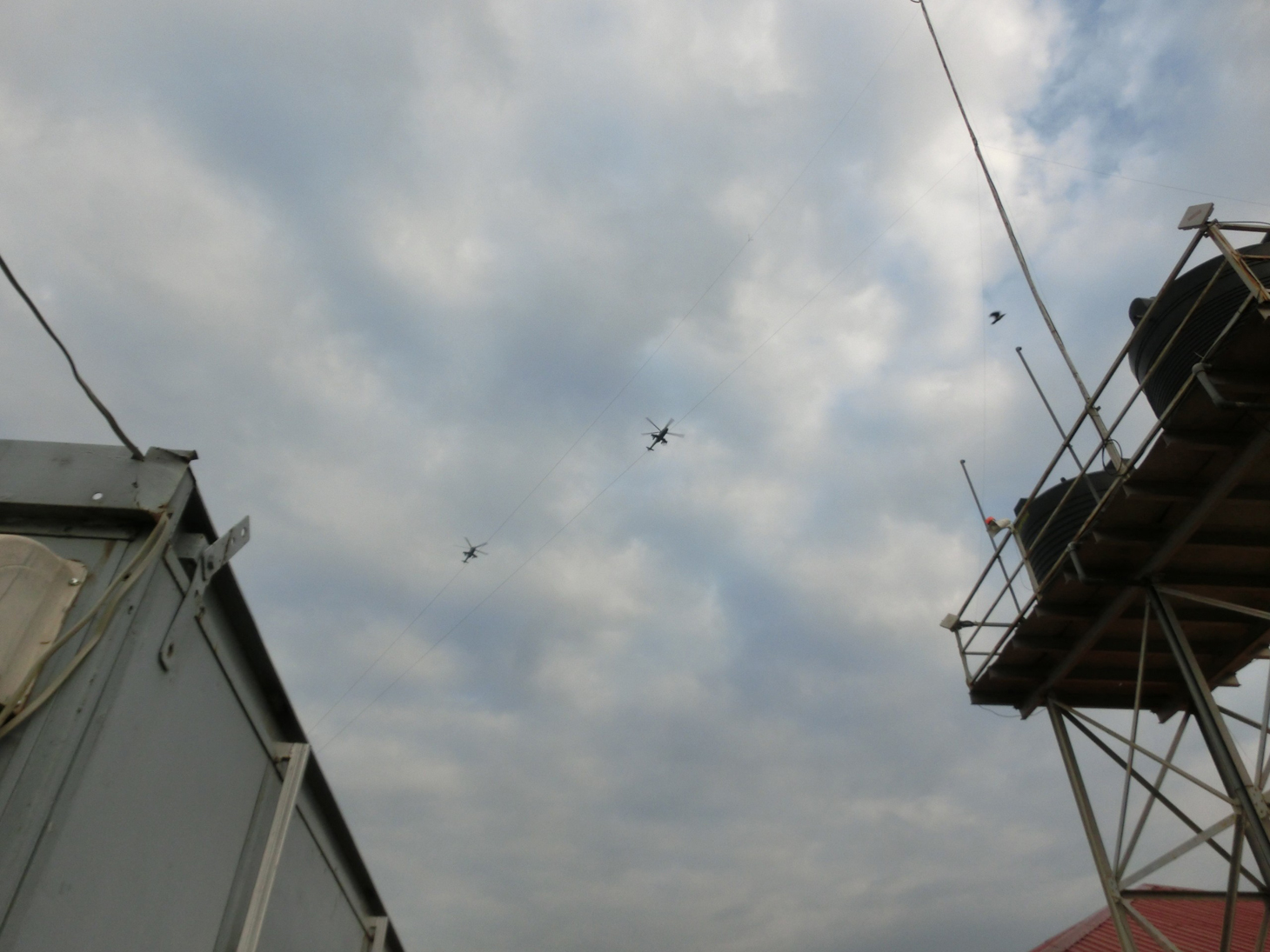
Then on July 7, 2016, the soldiers of the vice president’s sect fired upon the soldiers of the president’s sect, reigniting the civil war. This caused the project to be suspended yet again. On July 8, JICA advised project personnel to stay home. Then, on July 11, the Japanese government reissued an evacuation advisory. On July 13, all project personnel were evacuated out of the country on a charter plane.
2.4From July 2016 to May 2019 (from the second evacuation to resuming the project a second time)
On July 23, 2016, after the civil war broke out again, the vice president was dismissed and fled overseas, with the peace agreement having technically collapsed. The fighting then spread to regions outside of Juba as well, and in 2017, the number of refugees fleeing to neighboring countries, such as Uganda, rapidly increased. There were over 640,000 refugees in 2017 alone.
In response to the political climate gradually stabilizing in the midst of these difficult circumstances, on December 20, 2017, the Japanese government lowered the travel advice level from Level Four (Evacuation Advised) to Level Three (Do Not Travel) for Juba City and its surrounding regions.
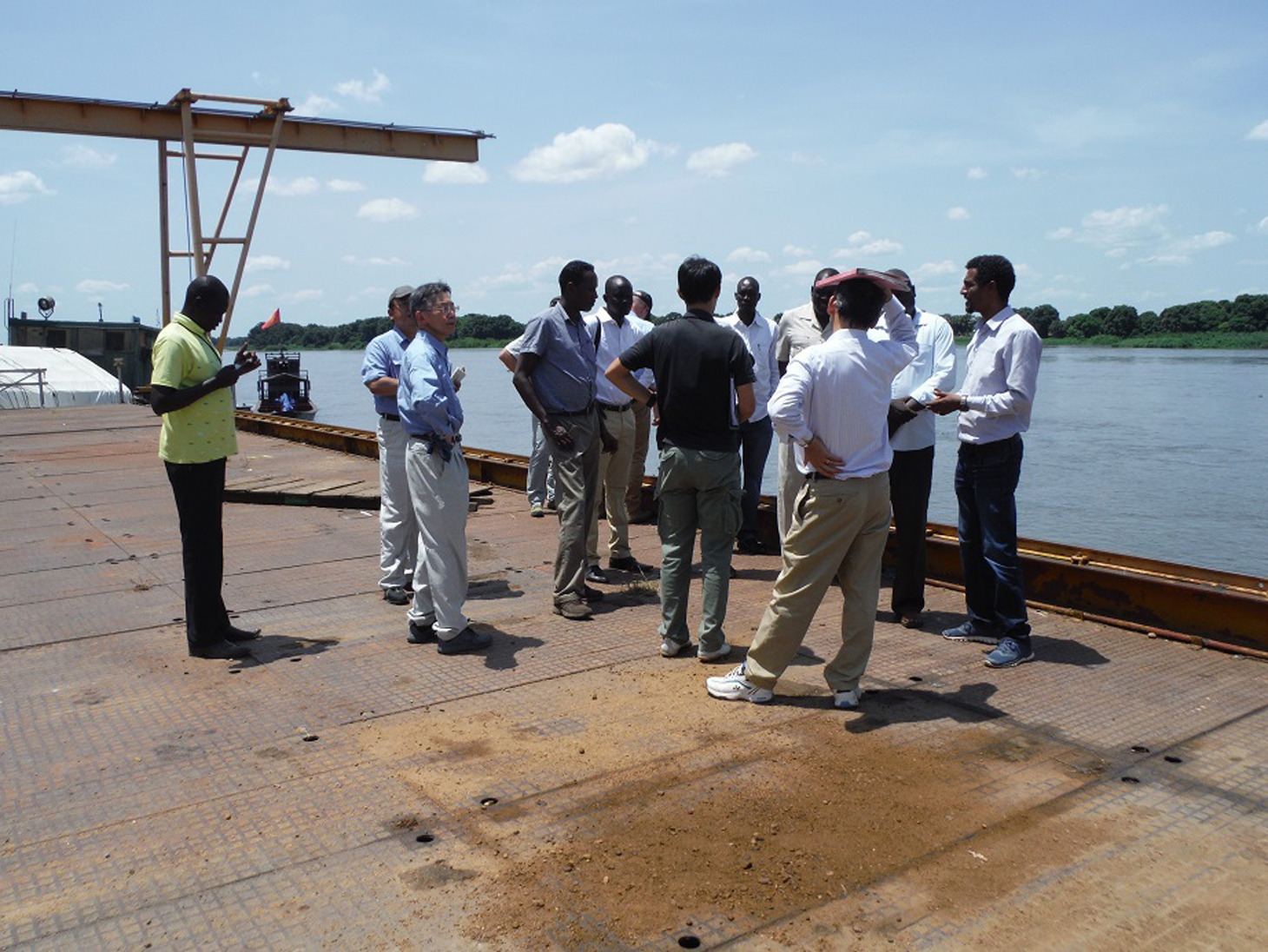
Then, in January 2018, JICA dispatched a mission to South Sudan to check that it was safe. In May and July 2018, the contractor also dispatched a survey team, and upon confirming that the country was safe, in December, personnel were sent to prepare to resume construction efforts for a second time. The project was then resumed for a second time on May 1, 2019.
Although operations at the worksite were completely suspended for approximately three years from the second evacuation up to the resuming of the project, local staff had continued to manage the site, keeping it in a good state.
2.5From May 2019 to April 2020 (from resuming the project a second time to the third evacuation)
As it had been about three years since the construction work was resumed, the main tasks that had to be done were checking the following items:
- • The condition of a pier which only had footing concrete placed, with wall reinforcement left exposed and submerged for three years
- • The condition of the shafts left in the river about 10 meters deep for three years when everyone was evacuated just before placing the foundation concrete after the excavation work was completed
- • The condition of the 150-meter steel girders which, although they were erected and underwent final bolt-tightening, suffered rust on the unpainted sections, as everyone was evacuated just before the painting work
- • The condition of the 450-meter-long temporary bridge spanning across the Nile River
All of these checks were conducted under the supervision of the Consultant engineer. Although some partial repair work was needed, there were no major problems, and so it was decided that the project could be resumed.
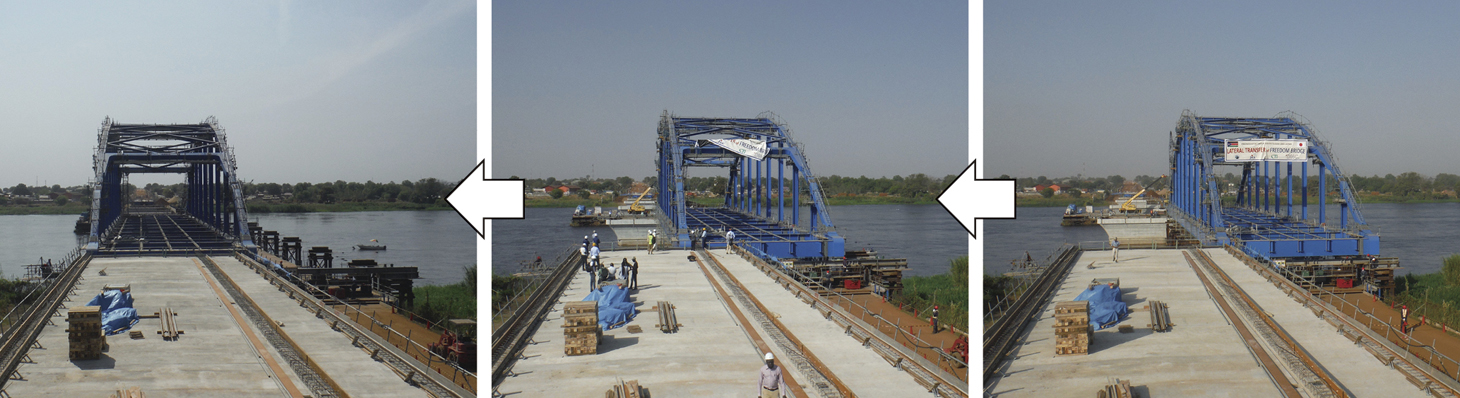
After resuming the project for a second time, the main construction work shifted from the substructure to the superstructure, and the substructure was completed in December 2019. In November, work began on installing the Langer bridges over the river. In January 2020, the first of four Langer bridges was completed using the lateral sliding method.
Although the project proceeded smoothly, the situation globally changed dramatically. On January 31, 2020, the World Health Organization (WHO) declared that the novel coronavirus (COVID-19) was “a public health emergency of international concern,” and in March 2020, indicated that it was a global pandemic.
With cases of infection also apparent within South Sudan, it was judged that a lack of a medical action plan within the country made it difficult to stay, and so the decision was made to suspend the project for a third time and evacuate.
At this point, work on the superstructure was well and truly underway, entering two major critical phases:
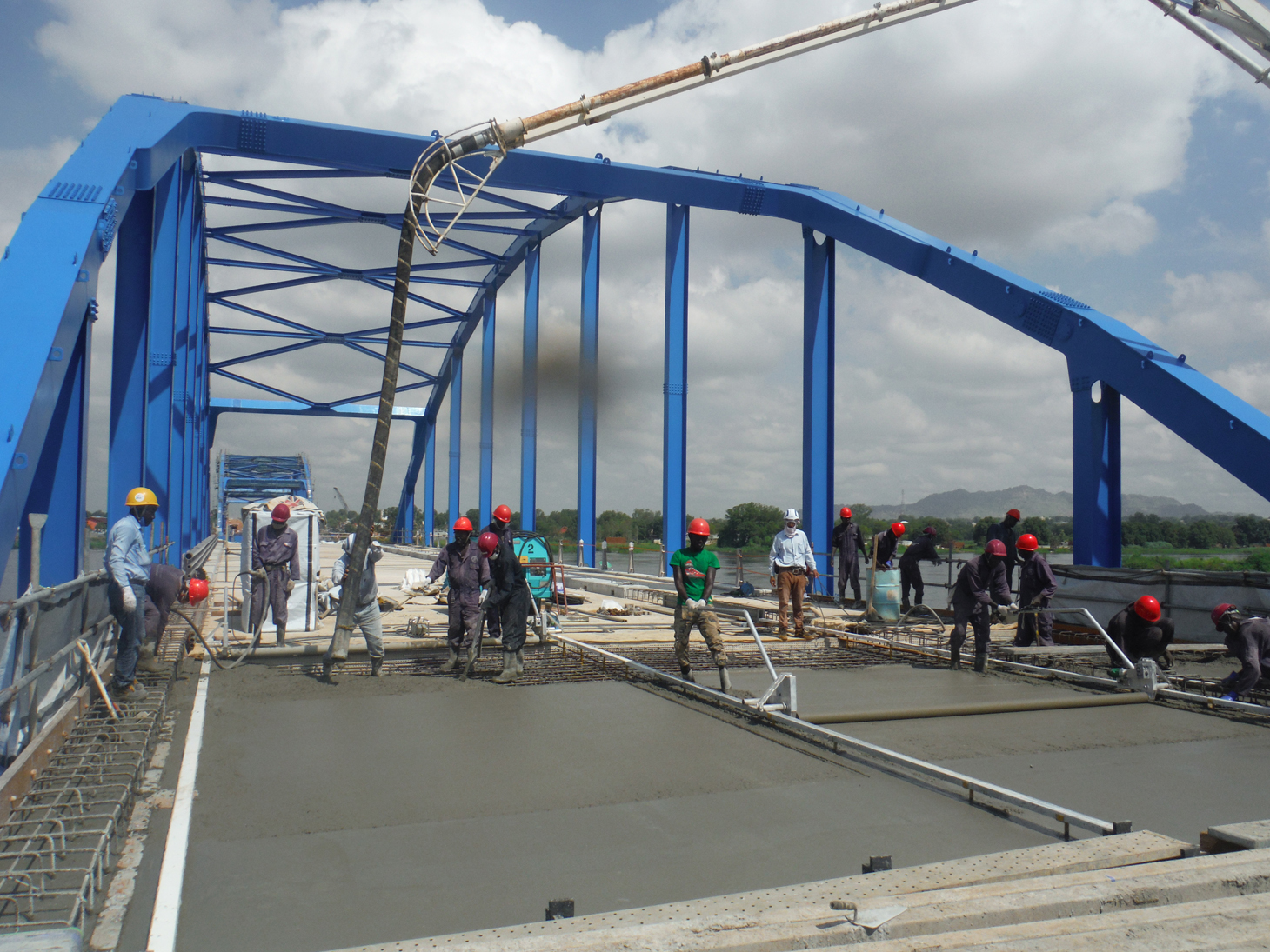
- • Work to place the concrete slabs had just started on the Langer bridges
- • The Langer bridge assembly work had been completed, and it was right before they would be installed using the lateral sliding method
It was agreed that those working at the site would return to their home country after completing these tasks, with staff evacuating after completing their work in a calm and orderly manner.
At this time, international flights were limited, and as there were issues in the system to allow people into each country, the evacuation took some time. With the evacuation starting on April 17, all Japanese and third-country staff had returned home by June 1.
2.6From April 2020 to March 2021 (from the third evacuation to resuming the project a third time)
The number of those infected with the COVID-19 increased for a while in South Sudan as well, with the government taking measures, such as reducing the working hours of civil servants. From August onward, however, the number of infected dropped, and civil servants also returned to work as normal.
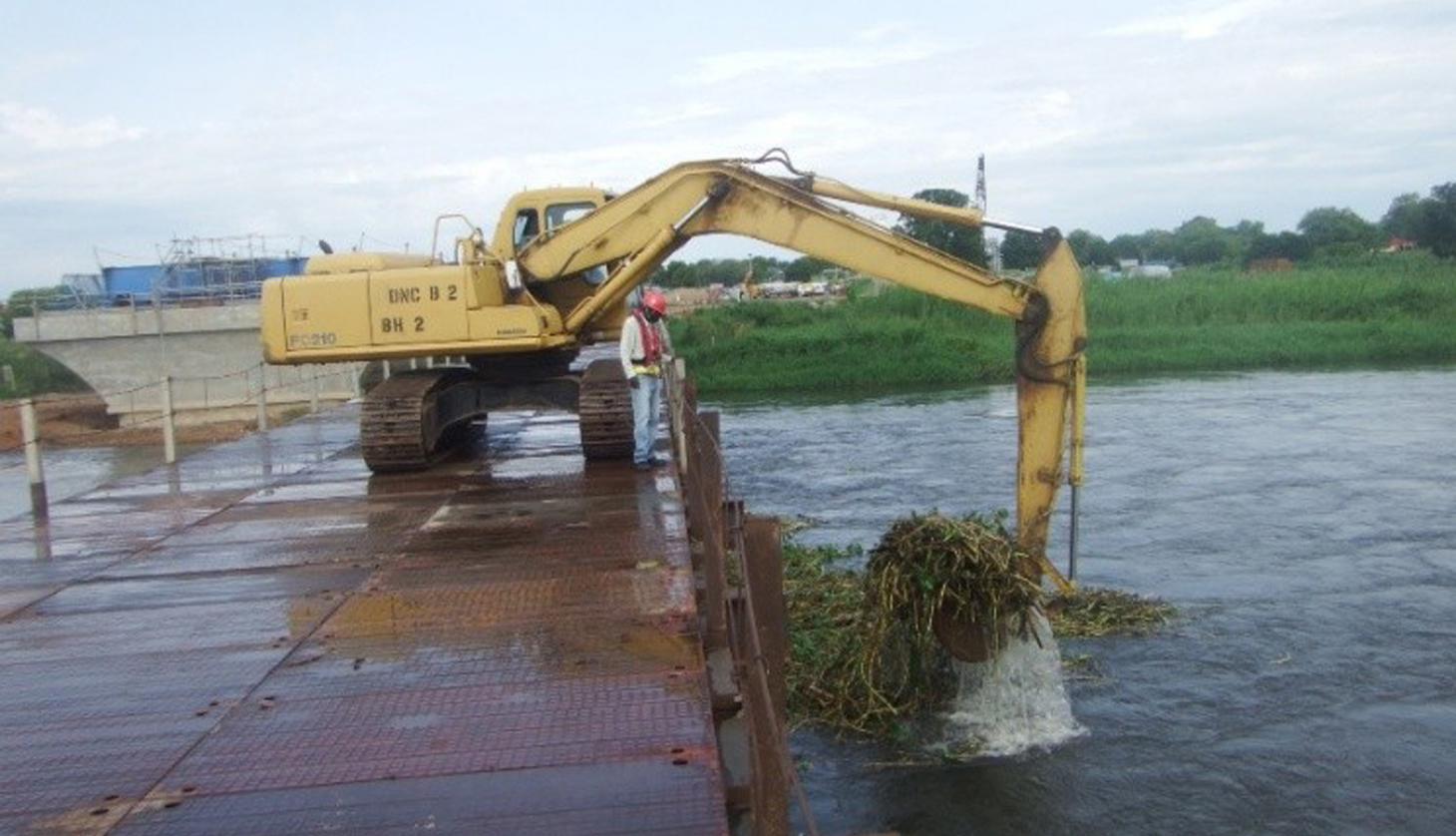
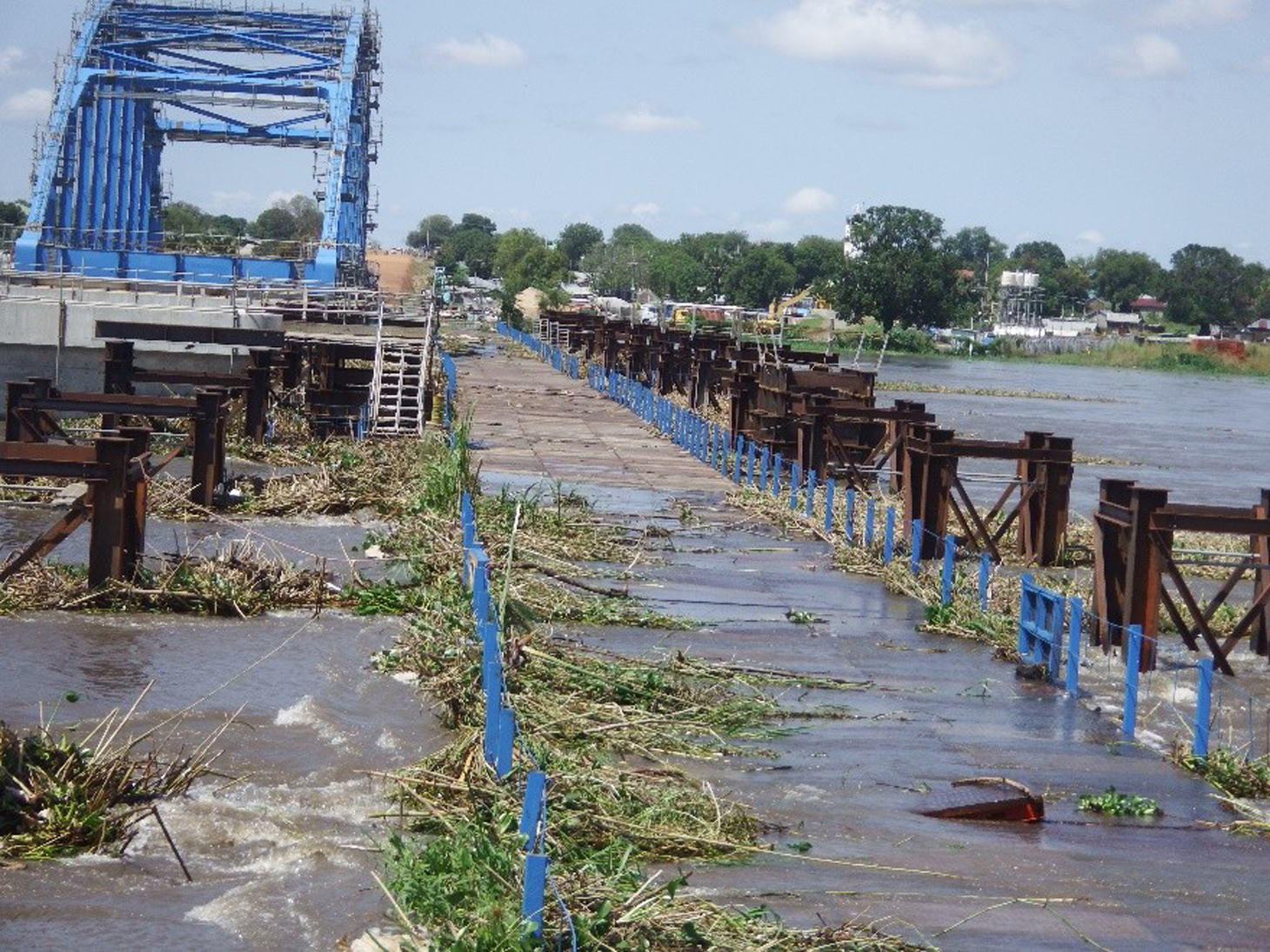
At the project site, in October, the water level of the Nile River rose, causing the temporary bridge to overflow several times. Although driftwood and other debris coming from upstream pushed against the temporary bridge, causing it to lean about 10 cm toward the downstream side, the local staff prevented it from worsening by performing routine maintenance work.
Meanwhile, after numerous discussions in Japan with JICA and consultants, a framework was gradually put in place to resume the project. In February 2021, the personnel who would resume the project arrived back in South Sudan, and after everyone spent two weeks in isolation at an accommodation, the project was resumed in the second half of March.
2.7From March 2021 to May 2022 (from resuming the project a third time to opening the bridge)
During the COVID-19 evacuation period, as mentioned earlier, the rise in the Nile River’s water level caused the temporary bridge to tilt downstream, and therefore, work was done to reinforce the slanted section. Inspections were also carried out at each location, and work resumed for the third time, with sights set on completion.
The work remaining when the project resumed was mainly as follows:
- • Placement of concrete slabs on the second Langer bridge
- • Erection of the third and fourth Langer bridges along with the placement of their concrete slabs
Work after the project was resumed progressed smoothly, and the lateral sliding of the last Langer bridge was completed in the second half of August. However, on September 25, only a month or so later, the Nile River, whose water level had begun rising the previous night, overflowed the temporary bridge by the morning, and the water level continued to rise until it reached its highest level on record. At midday, a cluster of water plants, large enough to cover a tennis court, became lodged beneath the temporary bridge, and the force from their buoyancy led to approximately 100 meters of the structure being swept away. This was an extremely shocking incident, and the sense of helplessness I experienced at the moment the temporary bridge collapsed is something I will never forget. As the lateral sliding of the last Langer bridge was completed a month earlier, we ultimately avoided any critical impact on the project as a whole.
The flood damage was not limited to a section of the temporary bridge being swept away, with the access route washed away and several sections submerged. Nonetheless, restoration efforts were undertaken and the project continued.
In January 2022, all slabs had been laid, and at the same time, work had begun to remove the temporary bridge. A part of the temporary bridge, a section of which, had been swept away, was greatly slanted, and so work to remove the bridge was extremely challenging. It was removed in early April.
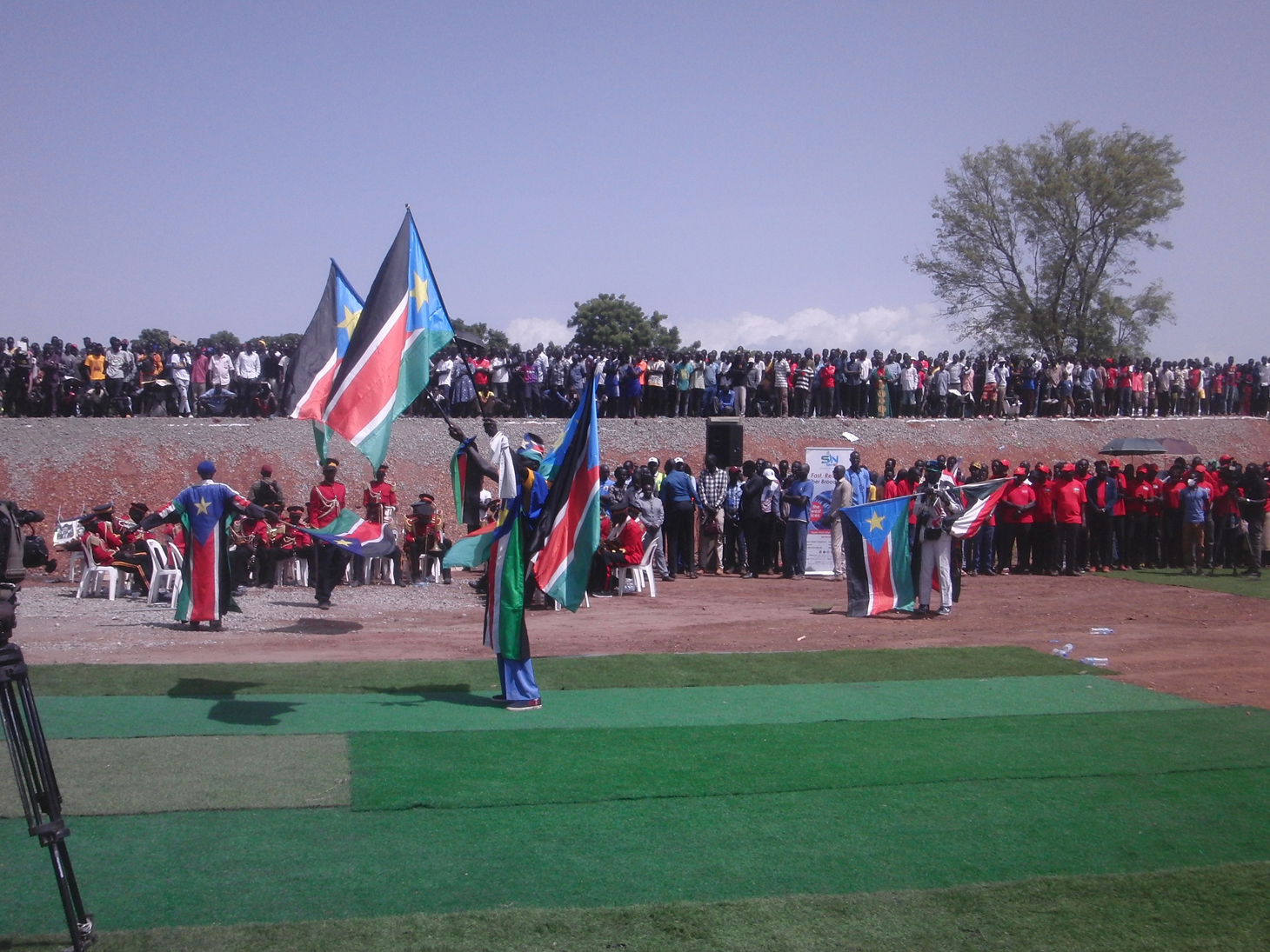
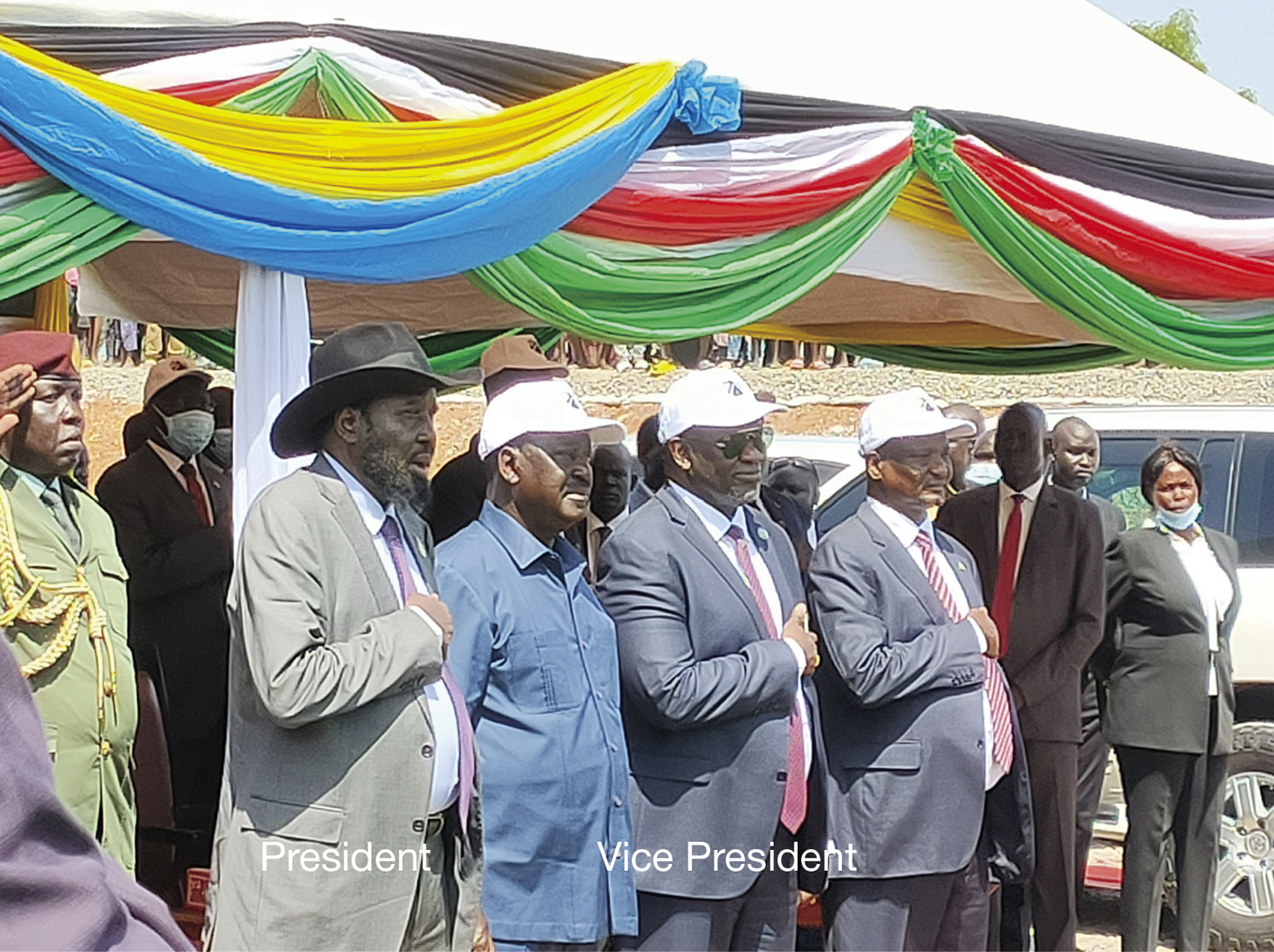
Then, on May 19, 2022, under a clear blue sky, a magnificent opening ceremony was held. The event was attended by many VIPs, including the president of South Sudan, the vice president, ministers, the ambassador of Japan for Sudan, the director of JICA, and other guests from overseas.
3Project Features
3.1The First Time Steel Pipe Sheet Piles Made by a Japanese Brand Have Been Used in Africa
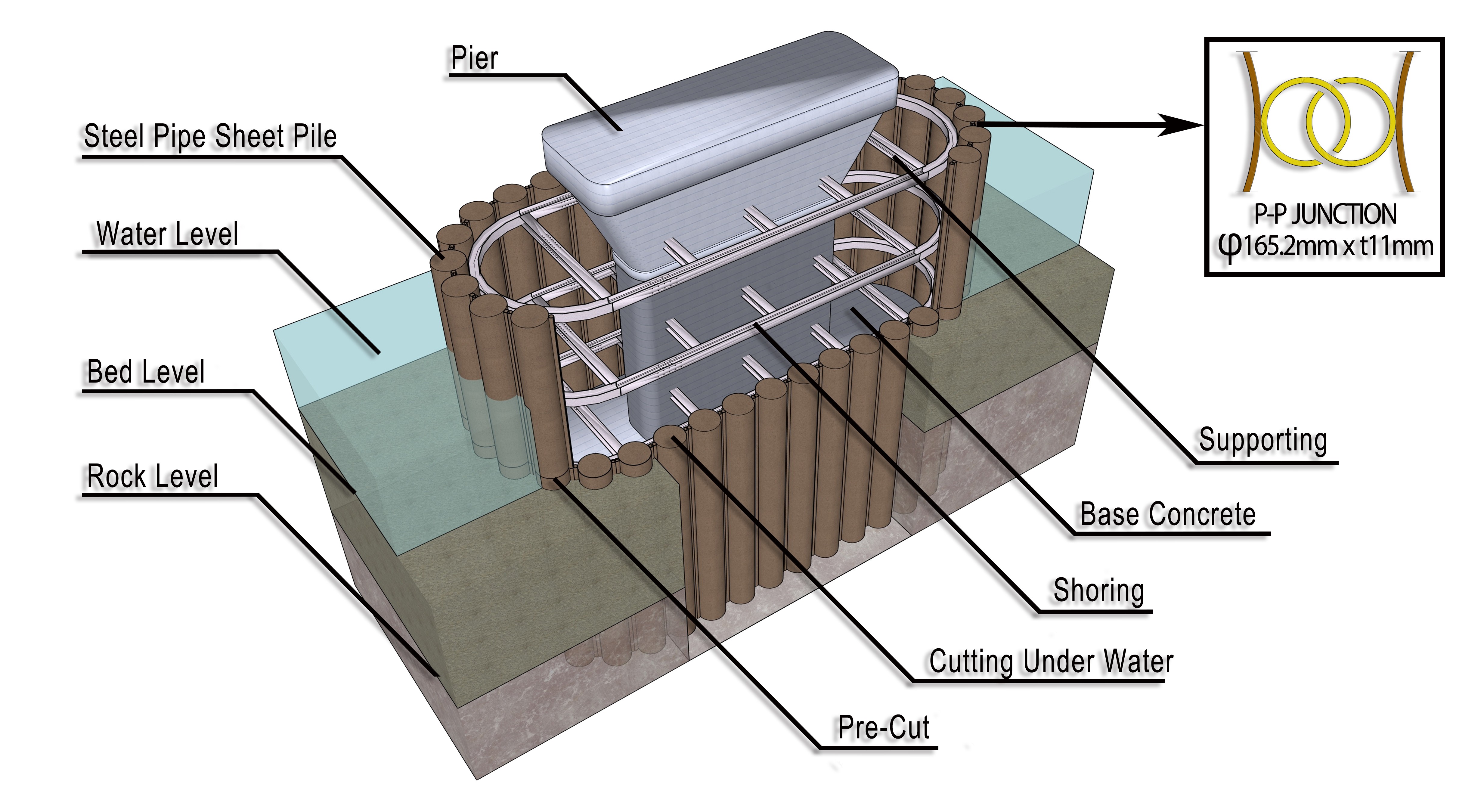
Of the 10 abutments and bridge columns, three are located within the river. For these three, steel pipe sheet piles were used in consideration of constructability and schedule efficiency. As there was a hard rock of strength of up to 148 MPa at a depth of six to nine meters in the water, where these bridge columns were to be installed, steel pipe sheet piles were installed after pre-excavating the area using a full-rotation casing drill machine with a diameter of 1.5 meters.
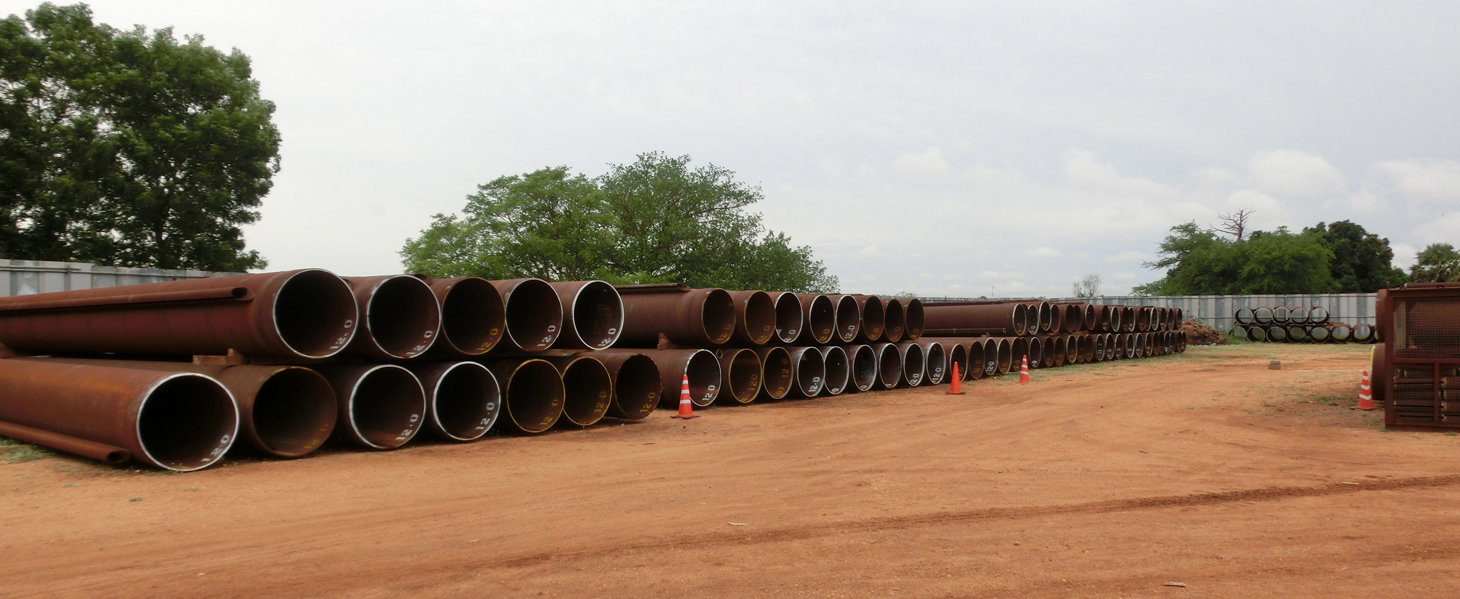
The steel pipe sheet piles used were 1.0 meter in diameter and 16.5 meters in average length, with 102 piles in total, amounting to an overall weight of 450 tonnes. To make the transportation of the piles efficient, however, the maximum length of each pile was limited to 12.0 meters, and these piles were welded on site to achieve the required length. These steel pipe sheet piles were manufactured by a Japanese manufacturer in Vietnam.
While there have been examples of steel pipe sheet pile foundations used in Africa, those used were all made by overseas manufacturers, and there was not single case of Japanese brand steel pipe sheet piles being used before. This is because, typically, the cost and time required to transport them from Japan make it difficult to use them.
In recent years, however, Japanese companies entering into the Asia market has made it possible to reduce production and transportation costs, as well as the transportation time, and therefore this was the first time that steel pipe sheet piles from a Japanese brand were used in Africa.
3.2Installing the Langer Bridges by Lateral Slide Method
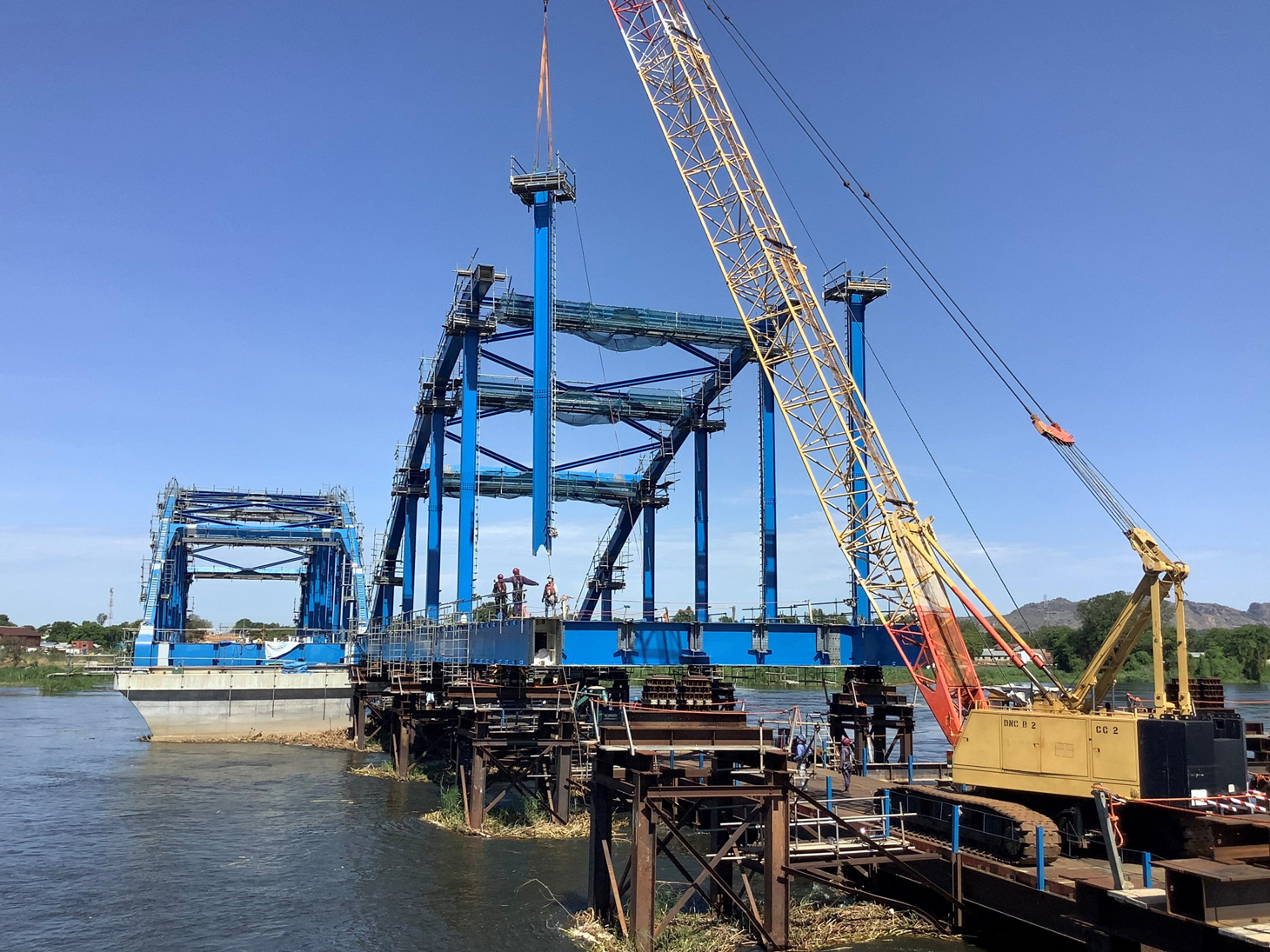
Of the bridge’s total length of 560 meters, the 350-meter river section consists of four Langer bridges, while the land sections are made up of plate girders. The four Langer bridges were put in place by installing an 80-ton crawler crane on the 6-meter-wide temporary bridge set up on the downstream side and using the bent assembled on both sides of the temporary bridge.
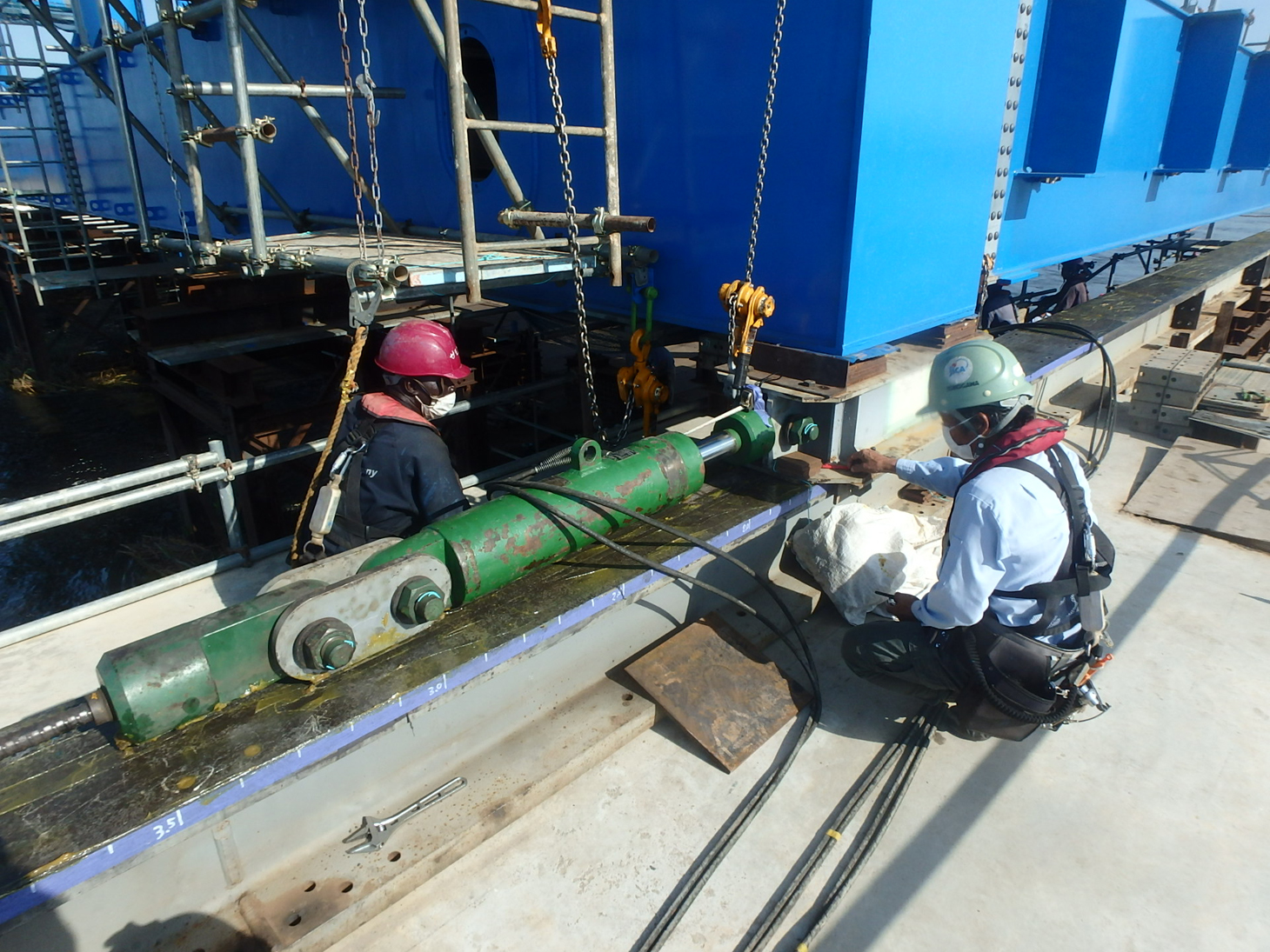
Once the installation was finished, the high-strength bolts were fully tightened, and the jack on the bent was released. After that, the girders were laterally moved 14.5 meters to their specified location on the bridge. For the lateral-shift setup, an extra-thick H-beam was placed, a 500 kN tension jack provided the driving force, and 12 mm Teflon sheets were used as the sliding pads. Repeating strokes of 500 mm, the work to laterally shift a single Langer bridge took roughly six hours.
After laterally shifting the Langer bridges, they were set in place by lowering them using a 1,500 kN hydraulic jack before securing them onto the pre-installed bearings.
4Lessons Leaned
In overseas construction projects, it is rare for a project team to be made up entirely of only Japanese civil engineers and local citizens. In many construction scenarios, the technical and manpower support of staff from a third country is essential. This construction project in South Sudan is no exception, with the project carried out with the cooperation of numerous workers from third-countries like Egypt, the Philippines, Thailand, Vietnam, and Sri Lanka.
This project, which began in 2013 in South Sudan where the political situation was unstable, saw a civil war break out in December of the same year, and all project members were forced to evacuate overseas for the first time. They were evacuated on charter planes operated by the UN and the United States. It was during the project’s preparation stage, and as there were not many third-country staff, no major problems occurred.
When civil war broke out again in July 2016, however, the construction work was at its peak, and the evacuation of 60 third-country staff members became a major challenge. Although they were cooperating on a Japanese project, the Japanese government does not have a system to guarantee the protection of third-country nationals, and in the event of an emergency, the protection of Japanese nationals takes priority, leaving third-country nationals outside this scope. The same applies to JICA. However, from a humanitarian standpoint, ensuring the safety of third-country staff was of utmost importance, and ultimately, thanks to the efforts of the Japanese embassy and JICA personnel, all staff were successfully evacuated.
The third evacuation was due to the global COVID-19 pandemic. Although there was a reduction in the number of commercial flights at this time, flight services remained. As some countries had entry restrictions in place; however, some third-country staff could not go home and were psychologically unsettled as a result.
From the viewpoint of the contractor, the third-country staff were key colleagues that supported the success of the project, and so there was no option of evacuating and leaving them behind. That being said, as there is risk for such an emergency to occur, in future projects carried out in the countries where political conditions or public security is unstable, it is extremely important to consider measures beforehand to ensure the safety of not only Japanese personnel but also staff from third countries.
In constructions in politically unstable countries, minimizing the number of different nationalities of third-country staff simplifies the response in the event of an emergency and makes it possible to avoid unnecessary trouble.
5Conclusion
The construction of a bridge in Juba, the capital of South Sudan, according to the Project for Construction of Nile River Bridge was a national project achieved with grant aid from the Japanese government. This project holds great significance as a symbol of peace, recovery, and economic development in South Sudan.
From the viewpoint of South Sudan, a landlocked country, this bridge—located at a key point on the international trunk road connecting Uganda and Kenya—eliminates the long-standing unreliability of logistics operations that caused reliance on the old, deteriorated Juba Bridge. In particular, it has a major role as a lifeline to support the transportation of supplies and the movement of people for recovery efforts.
Although the construction of the bridge, which began in 2013, experienced three stoppages due to armed conflict between rival political factions and the COVID-19 pandemic, it was completed in 2022 after approximately nine years. We were able to take the first step toward establishing a culture of civil engineering practice and safety management in South Sudan as a result of Japanese civil engineers, third-country civil engineers, and South Sudanese workers working together to advance the transfer of skills and the nurturing of talent.
The reason this bridge was named the Freedom Bridge was to encapsulate the hopes the people of South Sudan have for the future of their newly independent nation, as well as a strong desire for peace. The ceremony to commemorate the opening of the bridge was attended by both President Kiir and Vice President Machar, who were central characters during the civil war. Having them both in attendance acted as a strong symbol of national unity and reconciliation.
This bridge is not simply a piece of infrastructure but a foundation for the new nation-building of South Sudan, as well as a symbol of cooperation with the international community. I sincerely hope that the support from Japan will help to secure ongoing peace in South Sudan and its sustainable development.
Author
Hirohisa Kaizu
Born in 1969.
Graduated from the Faculty of Engineering, Kanazawa University in March 1993. Joined Dai Nippon Construction Co., Ltd. in April 1994 and was assigned to the Central Japan Division. Assigned to the International Division in April 2007. Since then, has been involved in grant aid projects in countries such as Kiribati, Egypt, Bhutan, Jordan, South Sudan, and Papua New Guinea.